Accurate catering portion planning can make or break an event. Ordering too little food leaves guests dissatisfied, while over-ordering increases costs and creates unnecessary waste. That’s why it is important to know how to estimate catering portions accurately.
Whether you are planning a birthday party, wedding, family gathering, or corporate event, understanding portion planning helps create a smooth and enjoyable experience for everyone. It keeps your budget under control, too.
How to Estimate Catering Portions Accurately

1. Understand the Type of Event
The timing and style of the gathering significantly affect how much people eat.
For example, guests at a wedding reception usually eat more because the event lasts several hours, while corporate lunches may require lighter portions.
2. Know Your Guest Count
A clear guest count forms the foundation of all catering calculations. That said, don’t rely solely on invitations sent out. Instead, estimate based on confirmed RSVPs and include a small buffer for unexpected guests.
Guest demographics also matter. Young adults generally consume more food than children or elderly guests.
Knowing your guest count allows you to estimate more accurately.
3. Calculate Main Dish Portions
The main course is the centerpiece of most catering menus. A good guideline for buffet catering is to estimate one serving of protein, one serving of carbohydrates, and one or two servings of vegetables per guest.
Typical adult estimates include:
- Protein: 150-200 grams per person
- Rice or noodles: 100-150 grams per person
- Vegetables: 80-120 grams per person
If multiple proteins are offered, reduce individual portion sizes slightly because guests are likely to sample each option.
4. Factor in Service Style
The next part of our How to Estimate Catering Portions Accurately guide is to factor in service style. Service style affects portion control dramatically.
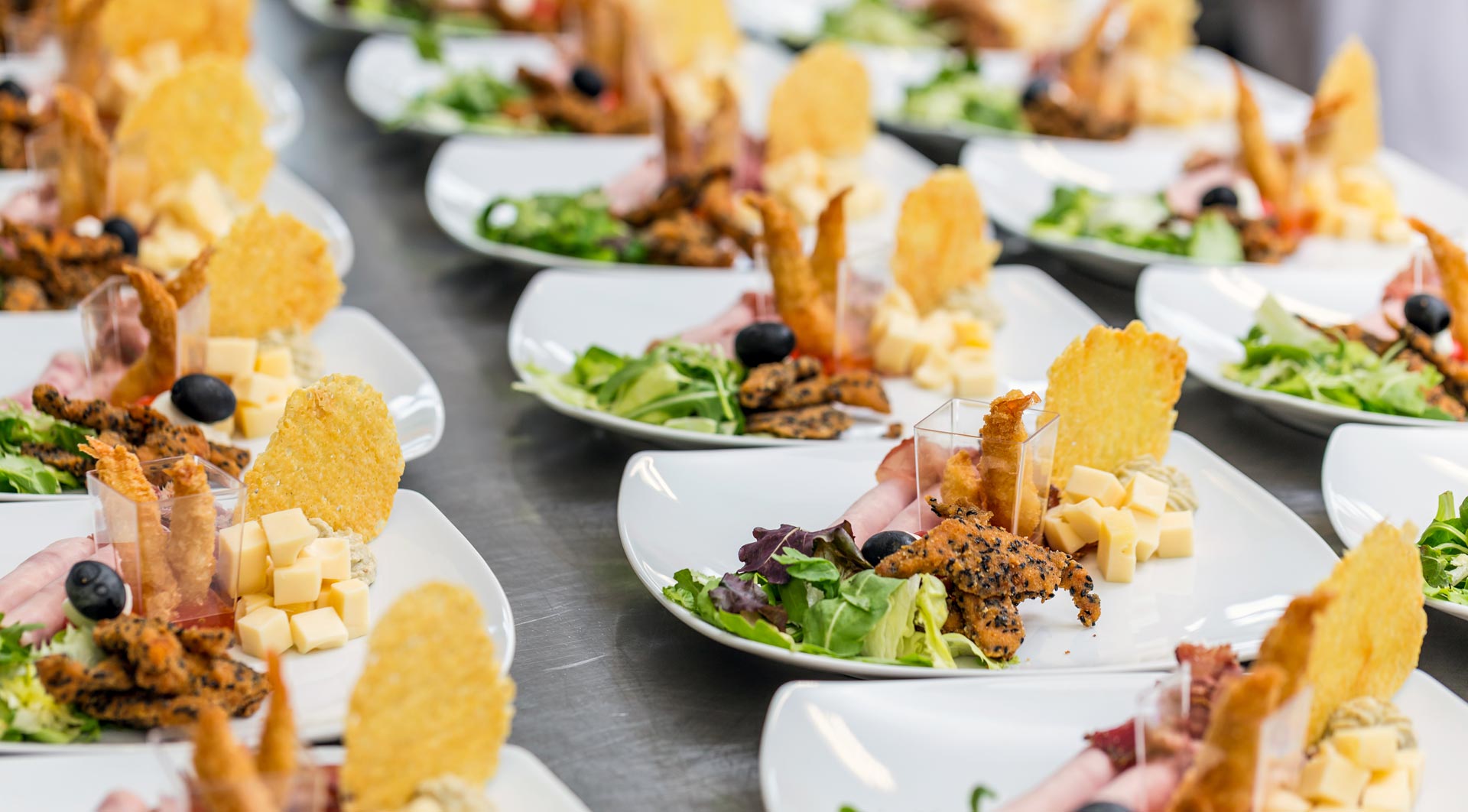
Plated meals provide the most accurate portion because servings are predetermined.
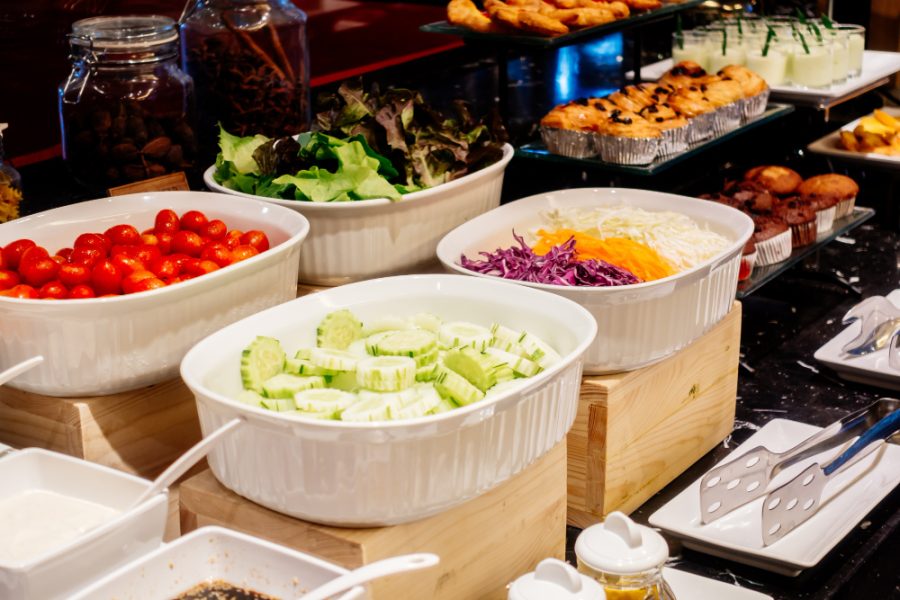
Buffets require larger quantities since guests serve themselves and may take extra portions. Live stations offer flexibility because food is prepared progressively throughout the event.
5. Don’t Forget Drinks and Desserts
Beverage planning is often underestimated, but it is also important. General beverage estimates include:
- 2-3 drinks per guest for short events
- 4-5 drinks per guest for longer gatherings
- More water for outdoor venues
Desserts should also match the event style.
6. Consider Cultural and Dietary Preferences
Modern catering must accommodate different dietary needs. Halal-friendly, vegetarian, gluten-free, and allergy-conscious options are increasingly common at both social and corporate events.
When estimating portions, determine how many guests require special meals. It is usually unnecessary to prepare equal quantities of specialty dishes unless most of the attendees share the same preference.
7. Work Closely With Your Caterer
How to estimate catering portions accurately? Work closely with your caterer. Professional caterers often have extensive experience estimating portions for different types of events.
Share detailed information about event schedule, guest demographics, serving style, venue conditions, and menu preferences. An experienced caterer can suggest realistic serving quantities and identify potential issues before the event.
FAQs How to Estimate Catering Portions Accurately
How much food do I need to order for a buffet?
Buffets usually require larger quantities than plated meals because guests may take second servings. Plan for approximately 1.5 servings per guest for main dishes and sides.
Should I prepare extra food?
Yes. Preparing an additional 5-10% helps accommodate unexpected guests and larger appetites, especially for buffet service.
What foods usually run out first?
Popular items such as seafood, grilled meats, fried snacks, and desserts tend to run out quickly. Signature dishes should always have additional backup portions.
How much dessert should I order?
One standard dessert serving per guest is usually sufficient. If offering mini desserts, estimate two to three pieces per person.
How do dietary restrictions affect catering estimates?
You should gather dietary information before the event and prepare a few extra specialty meals for guests with restrictions such as vegetarian, vegan, or gluten-free diets.
Conclusion
Estimating catering portions accurately requires balancing guest numbers, event style, menu variety, and dietary preferences. With our How to Estimate Catering Portions Accurately guide above and careful planning, you can avoid unnecessary costs while ensuring guests leave satisfied.
Need a catering service that can elevate every dining moment beautifully? At Mari Mari Catering, we have a wide variety of choices that suit different events, tastes, and dietary needs. All of our catering packages offer not just flavorful selections and professional service but also a memorable dining experience.
Our services include wedding catering, company bonding, birthday catering, and seasonal gatherings. For enquiries, contact us at Mari Mari Catering. Our office is at 1 Woodlands Height S737859.